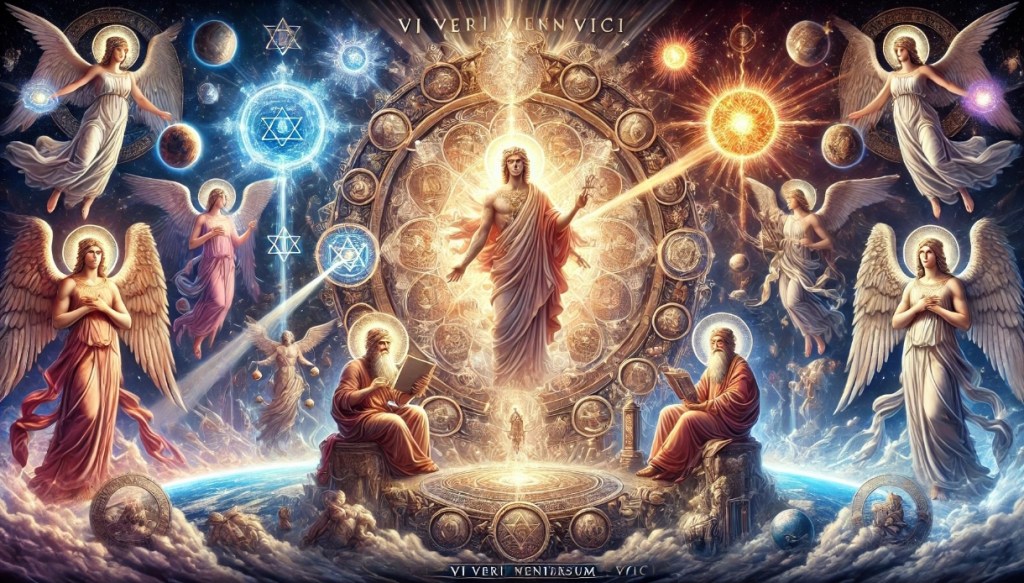
The transformation of Enoch into Metatron is one of the most profound and mystical stories in Jewish esoteric tradition. It merges themes of human righteousness, divine favor, and spiritual transformation into an account that has captivated the imaginations of scholars and mystics for centuries. This expanded exploration will delve deeper into the various texts that describe Enoch’s ascent, his experiences in heaven, and the significance of his transformation into the angel Metatron, including its influence on later mystical traditions like Merkabah mysticism and Kabbalistic thought.
Enoch’s Life: Early Background and the Call to Heaven
The biblical figure of Enoch is introduced in Genesis 5:21-24, where his brief mention leaves much to the imagination:
“Enoch lived sixty-five years and begot Methuselah. Enoch walked with God after he begot Methuselah three hundred years and had sons and daughters. So all the days of Enoch were three hundred and sixty-five years. And Enoch walked with God; and he was no more, for God took him.”
The key phrase, “Enoch walked with God,” suggests that Enoch led a life of unparalleled righteousness and closeness to the divine. It is this phrase that leads later Jewish mystical traditions to elaborate on Enoch’s relationship with God, implying that Enoch was taken to heaven alive, without experiencing death. His story, unlike any other patriarch, resonates with a sense of mystery and divine favor.
The Book of Enoch and Enoch’s Heavenly Journeys
Much of what we know about Enoch’s heavenly ascent comes from the Book of Enoch, also called 1 Enoch, a pseudepigraphal text from around the 3rd century BCE. While not part of the canonical Jewish Bible, it plays a significant role in Jewish apocalyptic and mystical thought. The Book of Enoch expands upon Enoch’s role as a mediator between the divine and the fallen angels, also known as the Watchers, who rebelled against God.
According to the Book of Enoch, God chose Enoch to be His messenger to these angels, who had corrupted the Earth by mating with human women and teaching forbidden knowledge, such as warfare and sorcery. Enoch’s journeys to the heavens, as outlined in this book, are extraordinary revelations of divine mysteries and cosmic order:
1. The First Heaven: The Wonders of Nature
In the first stage of his heavenly journey, Enoch is taken to the first heaven, where he witnesses the storehouses of snow, hail, and dew. Here, the angels who govern these natural elements show him how the forces of nature are regulated. This part of the journey reveals to Enoch the precise control that God exerts over the natural world, which would have been a significant revelation to an early audience, reinforcing the idea of divine order and the subordination of natural forces to God’s will.
2. The Second Heaven: The Place of Fallen Angels
In the second heaven, Enoch encounters angels who have fallen from grace, bound in chains as punishment for their disobedience. These are likely the Watchers, whose fall is detailed elsewhere in the Book of Enoch. The sight of their torment underscores the consequences of rebellion against God and highlights Enoch’s role as a divine mediator, conveying judgment to these celestial beings. Here, Enoch’s ability to communicate with angels and fallen spirits is emphasized, setting him apart as an exceptional figure.
3. The Third Heaven: The Garden of Eden and the Tree of Life
One of the most significant moments of Enoch’s journey occurs in the third heaven, where he is granted a vision of the Garden of Eden. In Jewish mysticism, the Garden of Eden exists not only as an earthly paradise but also as a heavenly counterpart. Enoch is shown both the terrestrial and celestial versions of Eden, where the righteous dwell after death. The Tree of Life, which represents eternal life and divine wisdom, is a central feature of this vision. Enoch’s encounter with the Tree of Life and the righteous souls awaiting the afterlife is symbolic of the ultimate reward for those who walk with God, as Enoch did.
4. The Fourth and Fifth Heavens: The Angelic Hierarchies
As Enoch ascends further, he gains insight into the angelic hierarchies that govern various aspects of creation. In these heavens, angels are tasked with overseeing the stars, the planets, and human history. Enoch witnesses how the cosmos operates under divine guidance and learns about the interconnectedness of the celestial and earthly realms. These realms also emphasize the role of angels as intermediaries between God and humanity, a role that Enoch himself will soon embody.
5. The Sixth Heaven: The Governance of the Earth
In the sixth heaven, Enoch meets angels responsible for the governance of the Earth, including those who oversee human affairs and natural phenomena. This heaven represents the divine oversight of the world, where the celestial beings keep everything in balance according to God’s will. Here, Enoch is taught about the delicate balance between divine intervention and the unfolding of human events. This knowledge prepares him for his later role as Metatron, a figure who will govern the earthly and celestial realms.
6. The Seventh Heaven: The Throne of God
The pinnacle of Enoch’s journey occurs in the seventh heaven, where he comes face to face with the divine throne. Surrounded by the most exalted angels, including the Seraphim, Cherubim, and Ophanim, Enoch witnesses the glory of God in a vision that is beyond human comprehension. This moment transforms Enoch spiritually and physically, as he experiences the full intensity of the divine presence. The overwhelming majesty and light of God’s throne symbolizes Enoch’s complete immersion into the divine mysteries.
In this highest realm, Enoch is given a new mission: to act as the mediator between God and the fallen angels. He receives knowledge of the future, including the coming judgment of the Earth and the great flood that will wipe away the corruption caused by the Watchers.
Enoch’s Transformation into Metatron
The transformation of Enoch into the angel Metatron is detailed in the Rabbinic text 3 Enoch, a mystical work that elaborates on the ascent of Enoch. This transformation is described as both a physical and spiritual metamorphosis, turning Enoch from a mortal into an angel of immense power and wisdom.
1. The Process of Transfiguration
Upon reaching the seventh heaven, Enoch’s body is no longer suited for existence in the divine realm. God transforms Enoch into a being of light and fire. His bones become flames, his flesh turns into fiery sparks, his veins into incandescent fire, and his eyes become shining light. This process reflects the idea that mortal flesh cannot endure the divine presence and must be transfigured into an immortal, ethereal form.
In addition to his new body, Enoch is given wings and enlarged to match the size of the highest angels. He is clothed in divine garments and crowned with a radiant diadem, further symbolizing his elevated status. This transformation signifies the complete transcendence of Enoch’s earthly nature, making him an angelic figure with unparalleled closeness to God.
2. The Naming of Metatron
Enoch is given the name Metatron, which is a subject of much debate among scholars. Some interpretations suggest that the name derives from the Greek word metathronos, meaning “the one who serves behind the throne.” This title highlights Metatron’s unique role as an angel who stands in the closest proximity to God, serving as both a scribe and mediator.
In some Kabbalistic traditions, Metatron is also called the Lesser YHWH, reflecting his exalted position and his role in communicating God’s will. However, this title does not imply that Metatron is equal to God; rather, it emphasizes that he is the highest-ranking angel, entrusted with the most sacred duties in the heavenly hierarchy.
3. Metatron’s Role and Responsibilities
Metatron’s role in heaven is multifaceted:
- The Heavenly Scribe: As the scribe of heaven, Metatron records every action that occurs in the universe, particularly the deeds of humanity. His role as a scribe underscores the importance of accountability and divine justice. Metatron ensures that all actions are recorded and that justice is served in both the heavenly and earthly realms.
- The Mediator: Metatron serves as a mediator between God and humanity, as well as between God and the angels. His role as a bridge between the mortal and divine realms reflects his unique position as a former human who ascended to the status of an angel. He is particularly associated with guiding souls through the heavenly spheres and interceding on their behalf.
- Guardian of the Throne: Metatron is often depicted as a guardian of God’s throne, responsible for overseeing the celestial hierarchy and ensuring that the divine order is maintained. This role reflects his status as the highest-ranking angel and his proximity to the divine presence.
- Teacher of Moses: In some mystical traditions, Metatron is identified as the angel who taught Moses the deeper mysteries of the Torah. This connection further solidifies Metatron’s role as a transmitter of divine wisdom, bridging the gap between the hidden and revealed aspects of the divine law.
The Symbolism of Enoch’s Transformation
Enoch’s transformation into Metatron serves as a powerful symbol of the potential for human beings to ascend spiritually and attain divine knowledge. It represents the idea that through righteousness and devotion, one can transcend the limitations of the physical world and enter into the divine presence. Enoch’s journey from a mortal patriarch to the highest-ranking angel reflects the ultimate spiritual aspiration in Jewish mysticism—the union with the divine and the acquisition of divine wisdom.
This transformation also highlights the dual nature of Metatron as both a former human and a celestial being. Enoch’s ascension into Metatron represents the ideal mystical journey in many ways: a transformation where the boundaries between human and divine, flesh and spirit, are transcended. This duality of Metatron’s nature is a key theme in Jewish mysticism, showing that spiritual ascension allows one to bridge the gap between the physical world and the spiritual realms.
Metatron in Kabbalistic Tradition
The transformation of Enoch into Metatron, while rooted in earlier Rabbinic and apocryphal texts, gains even deeper significance in the mystical teachings of Kabbalah. In Kabbalistic cosmology, Metatron is often associated with the Sefirot, particularly the Sefirah of Keter (the Crown) or sometimes Chokmah (Wisdom), indicating his exalted position in the divine hierarchy.
1. Metatron as the Guardian of the Tree of Life
Kabbalah’s Tree of Life, a central mystical diagram that represents the structure of the universe and the process of creation, places Metatron at an important junction. Metatron is said to guard the highest realms, ensuring that only those who are spiritually prepared may ascend. His role as the intermediary between the infinite divine (Ein Sof) and the finite world mirrors his role as a guide for those on the spiritual journey of ascent through the Sefirot.
Metatron’s association with the highest Sefirot also aligns him with the concept of divine will and the hidden aspects of God that are beyond human comprehension. As the “Lesser YHWH,” Metatron is entrusted with transmitting divine wisdom and ensuring the flow of divine energy from the upper worlds to the lower ones.
2. Metatron and the Akashic Records
In some mystical traditions, Metatron is also linked to the concept of the Akashic Records—a mystical library said to contain the records of all events, thoughts, and actions throughout history. As the scribe of heaven, Metatron is the custodian of these records, ensuring that all deeds are accounted for and that divine justice is fulfilled. This ties into his role as the Angel of the Presence, constantly standing before God and ensuring that divine law and order are maintained.
3. Metatron and the Mystical Ascent of Souls
One of the key themes in Kabbalah is the ascent of the soul through the Sefirot and into the divine presence. Metatron plays an essential role in guiding souls through this process. Just as he was transformed from a human into an angelic being, Metatron assists in the spiritual transformation of those seeking to ascend closer to the divine. In this role, he is both a guardian and a guide, ensuring that souls are prepared for the higher realms.
Kabbalistic texts often depict the spiritual journey as a return to the divine source, with Metatron functioning as the intermediary between the finite, material world and the infinite, divine light. His role as the Prince of the Divine Presence makes him one of the most important figures in facilitating this process.
Metatron in Merkabah Mysticism
Merkabah mysticism, which predates Kabbalah but shares many overlapping themes, also places a strong emphasis on the role of Metatron. Merkabah mystics were focused on achieving ecstatic visions of the divine throne and the heavenly chariot (Merkabah). In these traditions, Metatron serves as the guide for those attempting to ascend through the seven heavens to reach the divine throne.
1. Metatron as the Throne Angel
In Merkabah mysticism, Metatron is often referred to as the “Angel of the Throne” or “Chariot Rider,” reflecting his close association with the divine throne itself. Merkabah mystics believed that by undergoing spiritual purification, one could ascend through the heavens and achieve a vision of God’s throne. However, this journey was dangerous, and only those who were righteous and spiritually prepared could make the ascent. Metatron’s role was to guide these mystics, protecting them from the dangers of the celestial journey and ensuring their safe passage.
2. Metatron and the Book of Raziel
Another significant text in Jewish mysticism, the Book of Raziel, is sometimes linked with Metatron. This book is said to contain the secret knowledge of creation, angelic hierarchies, and divine mysteries, knowledge that Metatron either possesses or is responsible for transmitting. In some traditions, Metatron is believed to have given this book to Adam, providing humanity with divine knowledge that had been lost after the fall from Eden. This reinforces Metatron’s role as a transmitter of divine wisdom, helping humanity reconnect with the sacred knowledge necessary for spiritual ascent.
Enoch-Metatron and the Apocalyptic Tradition
In addition to his role in mysticism, Metatron also appears in apocalyptic traditions, particularly within Jewish apocalyptic literature. The Book of Enoch, for example, can be classified as an apocalyptic text due to its descriptions of heavenly visions and predictions of divine judgment. In this context, Metatron serves as a mediator between God and humanity, delivering divine warnings and revelations about the future.
1. Metatron’s Role in Judgment
In apocalyptic literature, Metatron is often portrayed as playing a key role in the end times, serving as an intercessor for the righteous and as a scribe who records the deeds of all humanity. As the one who keeps the records of every person’s actions, Metatron’s role becomes crucial in determining the fate of souls at the final judgment. His proximity to the divine throne and his position as a scribe make him a witness to all human deeds, good and bad, and therefore instrumental in carrying out divine justice.
2. The Apocalypse of Metatron
Some apocalyptic texts even focus specifically on Metatron’s role at the end of days. These texts suggest that Metatron will serve as a guide for the righteous, leading them through the celestial realms during the final days of the world. He is also depicted as the one who will open the Book of Life and the Book of Judgment, ensuring that each soul is judged according to its deeds.
Metatron’s Influence Beyond Judaism
The figure of Metatron has transcended Jewish mysticism and has been adopted into other esoteric traditions, including certain strains of Christian mysticism, Gnosticism, and Western esotericism.
1. Metatron in Christian Mysticism
In some Christian mystical traditions, Metatron is seen as a figure who prefigures or parallels Christ. His role as a mediator between God and humanity and his transformation from human to divine being are sometimes compared to the nature of Christ, who serves as the mediator of salvation. Though this connection is not universally accepted in Christian theology, it highlights the potential for Metatron to serve as a bridge between Jewish and Christian mystical thought.
2. Metatron in Gnosticism
In Gnostic thought, which often emphasizes secret knowledge and divine intermediaries, Metatron is sometimes linked to Sophia (Wisdom) or to the Logos (Divine Word). In this context, Metatron is seen as the embodiment of divine wisdom, possessing the knowledge necessary for spiritual ascent and enlightenment. Some Gnostic texts even portray Metatron as a key figure in the process of human salvation, guiding souls through the cosmic realms and revealing the hidden truths of the universe.
3. Metatron in Western Esotericism
Metatron also appears in the Hermetic and occult traditions of the Renaissance and later Western esotericism. In these traditions, Metatron is often invoked as a powerful angelic figure who can provide spiritual guidance, wisdom, and protection. His association with divine knowledge makes him a central figure in many magical and mystical practices that seek to tap into the higher realms of consciousness.
Conclusion: The Enduring Legacy of Enoch and Metatron
The story of Enoch’s transformation into Metatron continues to captivate mystics, scholars, and esoteric practitioners. Enoch’s ascension from a righteous human to the most powerful of angels symbolizes the potential for spiritual ascent and divine union. His role as Metatron, the scribe of heaven and the guardian of divine mysteries, reinforces the idea that knowledge of the divine is both attainable and transformative.
Metatron remains one of the most complex and exalted figures in Jewish mysticism, embodying the ultimate goal of spiritual transformation—becoming one with the divine wisdom and light. His journey from mortal to angel serves as a reminder of the profound mysteries that lie beyond the material world, awaiting those who seek to walk with God as Enoch did.
Share this:

Discover more from The Code of the Ancients
Subscribe to get the latest posts sent to your email.