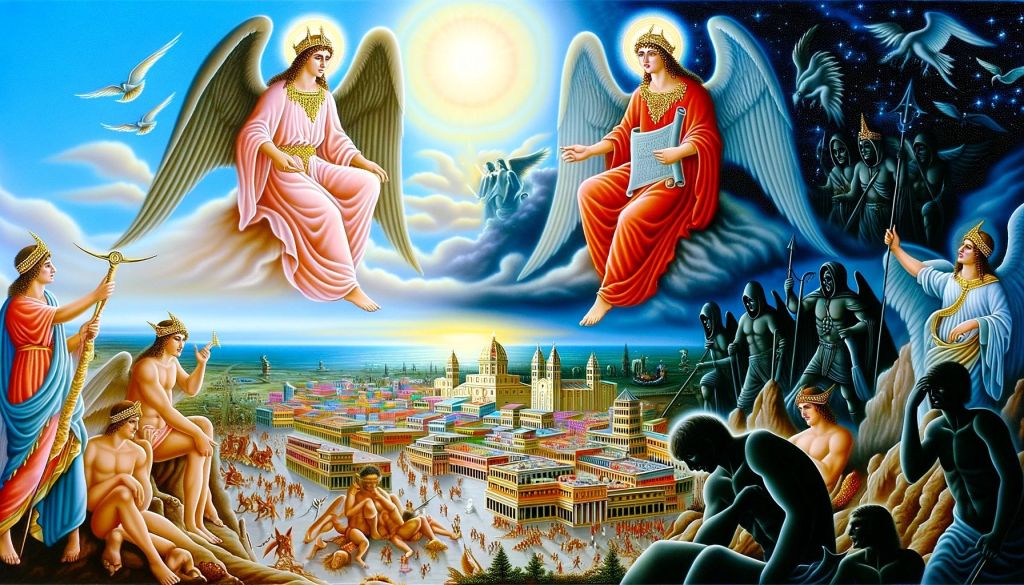
Metatron:
From a divine perspective, sacred texts are the repositories of spiritual wisdom and guidance, given to humanity through divine inspiration. They are the foundational documents of various religious traditions, providing teachings, laws, and narratives that shape the faith and practices of their followers. Each sacred text is a unique manifestation of the divine truth, tailored to the specific cultural and historical contexts in which it was revealed. Let us explore some of the major sacred texts of different religions:
- The Bible – Christianity:
The Bible is the sacred text of Christians, comprising the Old Testament and the New Testament. The Old Testament includes the Hebrew Scriptures, which recount the history, laws, and prophecies of the Jewish people. The New Testament contains the teachings of Jesus Christ, the Gospels, and the writings of his apostles, providing the foundation for Christian beliefs and practices. - The Quran – Islam:
The Quran is the holy book of Islam, believed to be the word of God as revealed to the Prophet Muhammad by the angel Gabriel. It is written in Arabic and consists of 114 chapters called surahs. The Quran provides guidance on all aspects of life, including law, morality, and spirituality, and is recited and memorized by Muslims worldwide. - The Torah – Judaism:
The Torah is the central and most important text of Judaism, consisting of the first five books of the Hebrew Bible (Genesis, Exodus, Leviticus, Numbers, and Deuteronomy). It contains the laws and teachings given to Moses on Mount Sinai and serves as the foundation of Jewish religious practice and identity.
Sandalphon:
Continuing, we find that other religious traditions also have their sacred texts, each carrying the essence of divine wisdom in their unique way:
- The Vedas – Hinduism:
The Vedas are the oldest and most authoritative scriptures of Hinduism, composed in ancient Sanskrit. They consist of four main collections: Rigveda, Samaveda, Yajurveda, and Atharvaveda. These texts contain hymns, rituals, and philosophical teachings that form the basis of Hindu religious practices and beliefs. - The Tripitaka (Pali Canon) – Buddhism:
The Tripitaka, also known as the Pali Canon, is the primary scripture of Theravada Buddhism. It consists of three “baskets” (pitaka): the Vinaya Pitaka (monastic rules), the Sutta Pitaka (discourses of the Buddha), and the Abhidhamma Pitaka (philosophical and doctrinal analysis). These texts preserve the teachings of the Buddha and guide Buddhists in their spiritual practice. - The Guru Granth Sahib – Sikhism:
The Guru Granth Sahib is the central religious scripture of Sikhism, regarded by Sikhs as their eternal Guru. It is a collection of hymns and writings by Sikh Gurus and other saints, written in Gurmukhi script. The text emphasizes devotion to one God, equality, and social justice. - The Tao Te Ching – Taoism:
The Tao Te Ching is the foundational text of Taoism, attributed to the ancient Chinese sage Laozi. It consists of 81 short chapters that explore the nature of the Tao (the Way) and offer wisdom on living in harmony with the natural order of the universe. - The Analects – Confucianism:
The Analects are a collection of sayings and ideas attributed to the Chinese philosopher Confucius and his disciples. They focus on ethics, morality, and proper conduct in personal and governmental affairs, forming the core of Confucian thought.
Metatron:
Each of these sacred texts provides a unique path to understanding the divine and living a life aligned with spiritual principles. They are gifts from the Divine, meant to guide humanity towards greater wisdom, compassion, and unity. In studying and respecting these texts, we honor the diverse ways in which the Divine has revealed itself to different cultures and peoples throughout history.
Sandalphon:
Indeed, by embracing the teachings of these sacred texts, we can cultivate a deeper connection with the Divine, foster mutual understanding and respect among different religious traditions, and work towards a more harmonious and compassionate world.
Share this:

Discover more from The Code of the Ancients
Subscribe to get the latest posts sent to your email.