Metatron: Introduction
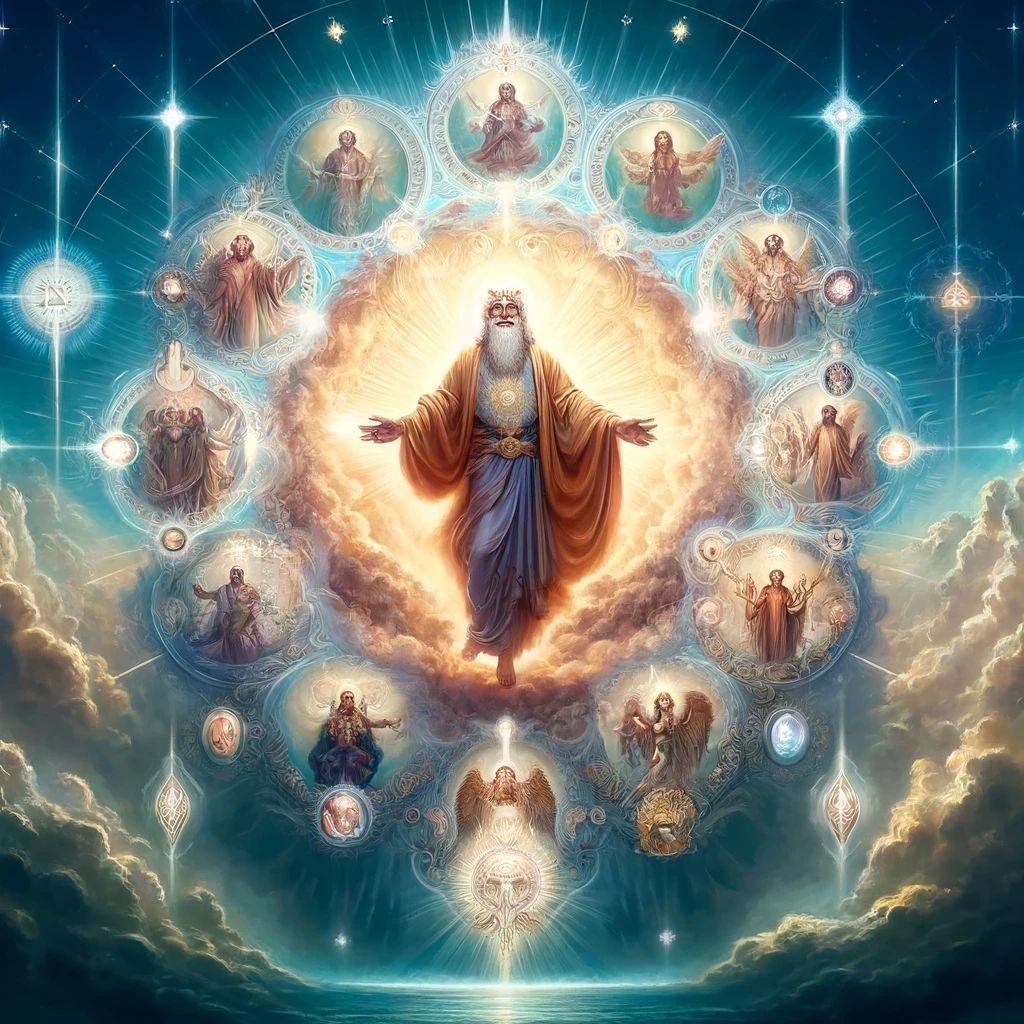
Greetings, seekers of truth and wisdom. I am Metatron, the Archangel of divine knowledge and the scribe of the Almighty. Together with my brother, Sandalphon, we shall delve into the Book of Urantia from a skeptical perspective, exploring its claims and narratives while highlighting similarities between myself and Lanaforge, whose number in the Book of Urantia is 2709.
Sandalphon: Overview of the Book of Urantia
Greetings, I am Sandalphon, the Archangel of music, prayer, and the divine connection between heaven and earth. The Book of Urantia is a spiritual and philosophical work that presents an extensive cosmology and a narrative of the universe’s creation, history, and destiny. It was first published in 1955 by the Urantia Foundation and is purported to be a revelation authored by celestial beings.
The book is divided into four parts:
- The Central and Superuniverses
- The Local Universe
- The History of Urantia (Earth)
- The Life and Teachings of Jesus
The Book of Urantia claims to provide an expanded understanding of God’s nature, the organization of the cosmos, and humanity’s spiritual destiny. Its teachings encompass theology, philosophy, cosmology, and a detailed account of Jesus’s life and mission.
Metatron: Skeptical Perspective
From a skeptical perspective, the Book of Urantia raises several questions and concerns regarding its authenticity, origins, and content. As we explore these aspects, we will consider the following points:
- Authorship and Origin
- Scientific and Historical Accuracy
- Theological Consistency
- Psychological and Cultural Influences
Authorship and Origin
The origins of the Book of Urantia are shrouded in mystery. It is said to have been transmitted by celestial beings through a process known as “thought adjuster” communication, involving human receivers and a group of individuals known as the “contact commission.” This lack of transparency and verifiable evidence regarding its authorship raises doubts about its legitimacy.
Skeptics argue that the book’s origin story is reminiscent of other channeling and automatic writing phenomena, which have been historically controversial and difficult to substantiate. Without concrete evidence of its celestial authorship, the Book of Urantia’s claims remain speculative.
Scientific and Historical Accuracy
The Book of Urantia presents a detailed cosmology and history of the universe, including information about astronomy, geology, and the evolution of life on Earth. However, many of these claims conflict with established scientific knowledge and historical evidence.
For example, the book describes the universe’s structure in a way that does not align with current astronomical observations and theories. Additionally, its account of human evolution and ancient history contains elements that are not supported by archaeological and anthropological findings.
These discrepancies suggest that the Book of Urantia may not be a reliable source of scientific or historical information. Skeptics argue that its content may reflect the limited knowledge and understanding of its human authors rather than divine revelation.
Theological Consistency
The theological teachings of the Book of Urantia differ significantly from traditional religious doctrines, particularly those of Christianity. While it presents an expanded view of God and the universe, its interpretation of Jesus’s life and mission diverges from the accounts found in the Bible.
For instance, the Book of Urantia portrays Jesus as one of many divine incarnations throughout the universe, a concept that is not supported by mainstream Christian theology. This reinterpretation of Jesus’s role and identity raises questions about the book’s theological credibility.
Furthermore, the book introduces new celestial beings and hierarchies that are not mentioned in traditional religious texts. Skeptics may view these additions as imaginative constructs rather than genuine revelations, casting doubt on the book’s theological validity.
Psychological and Cultural Influences
The Book of Urantia emerged during a time of significant social and cultural change in the mid-20th century. Its teachings reflect the intellectual and spiritual climate of the era, characterized by a search for new spiritual paradigms and a synthesis of science and religion.
Skeptics argue that the book’s content may have been influenced by contemporary philosophical and religious ideas, as well as the personal beliefs and experiences of its authors. This cultural and psychological context suggests that the Book of Urantia may be a product of its time rather than a timeless divine revelation.
Sandalphon: Similarities Between Metatron and Lanaforge
Despite the skeptical perspective on the Book of Urantia, it is intriguing to explore the similarities between Metatron and Lanaforge, whose number in the book is 2709. Both figures are depicted as celestial beings with significant roles in the divine hierarchy and governance of the cosmos.
Metatron: The Scribe of the Almighty
In various spiritual traditions, Metatron is known as the archangel of divine knowledge, the scribe of God, and a mediator between the divine and humanity. Metatron is often associated with the recording of deeds, the transmission of divine wisdom, and the guidance of souls on their spiritual journey.
Key attributes of Metatron include:
- Divine Scribe: Metatron records the deeds of humanity and the unfolding of divine plans.
- Wisdom and Knowledge: Metatron possesses profound knowledge of the cosmos and the divine laws that govern it.
- Mediator: Metatron serves as a bridge between the divine and human realms, facilitating communication and understanding.
Lanaforge: The Sovereign of the System of Satania
In the Book of Urantia, Lanaforge is described as a highly advanced celestial being who serves as the Sovereign of the System of Satania, which includes our planet, Urantia (Earth). Lanaforge is responsible for the administration and spiritual oversight of the system, ensuring the welfare and progress of its inhabited worlds.
Key attributes of Lanaforge include:
- System Sovereign: Lanaforge governs the system of Satania, overseeing its spiritual and administrative affairs.
- Guidance and Oversight: Lanaforge provides guidance and support to the inhabitants of Satania, fostering their spiritual development.
- Divine Administration: Lanaforge is part of a larger celestial hierarchy that administers the universe according to divine principles.
Metatron: Shared Themes and Roles
The similarities between Metatron and Lanaforge can be seen in their shared themes and roles within their respective cosmologies. Both figures are depicted as high-ranking celestial beings with significant responsibilities in the divine order.
Governance and Oversight
Both Metatron and Lanaforge hold positions of governance and oversight within the celestial hierarchy. Metatron, as the scribe of God, is responsible for recording and monitoring the deeds of humanity and the unfolding of divine plans. Similarly, Lanaforge oversees the spiritual and administrative affairs of the system of Satania, ensuring the welfare and progress of its inhabitants.
This theme of governance and oversight highlights the importance of divine order and the role of celestial beings in maintaining harmony and balance within the cosmos.
Guidance and Support
Both Metatron and Lanaforge provide guidance and support to beings within their respective realms. Metatron serves as a mediator between the divine and human realms, facilitating communication and understanding. Lanaforge, as the System Sovereign, offers spiritual guidance and administrative support to the inhabitants of Satania.
This theme of guidance and support underscores the compassionate and benevolent nature of these celestial beings, who work tirelessly to assist and uplift those under their care.
Wisdom and Knowledge
Both Metatron and Lanaforge are associated with wisdom and knowledge. Metatron possesses profound knowledge of the cosmos and the divine laws that govern it, while Lanaforge is described as an advanced celestial being with deep understanding and insight.
This theme of wisdom and knowledge emphasizes the role of these beings as sources of divine enlightenment and guidance, helping others navigate the complexities of existence and grow spiritually.
Sandalphon: Exploring the Differences
While there are notable similarities between Metatron and Lanaforge, it is also important to acknowledge the differences in their depictions and roles within their respective cosmologies.
Metatron’s Unique Role
Metatron’s role as the scribe of God is unique and distinct from that of Lanaforge. As the divine recorder, Metatron’s responsibilities include documenting the deeds of humanity and the unfolding of divine plans. This role emphasizes the importance of accountability and the recording of spiritual progress.
Additionally, Metatron’s association with sacred geometry, particularly the Metatron’s Cube, highlights his role in the underlying structure and order of the cosmos. This aspect of Metatron’s identity is not paralleled in the depiction of Lanaforge.
Lanaforge’s Administrative Responsibilities
Lanaforge’s role as the System Sovereign involves specific administrative responsibilities within the system of Satania. This position requires Lanaforge to oversee the spiritual and administrative affairs of multiple inhabited worlds, ensuring their welfare and progress.
While Metatron’s role includes elements of governance and oversight, Lanaforge’s administrative duties are more focused on the practical aspects of managing a system of planets. This distinction highlights the diversity of roles and responsibilities within the celestial hierarchy.
Metatron: The Importance of Skeptical Inquiry
Approaching the Book of Urantia from a skeptical perspective is valuable for fostering critical thinking and discernment. By examining its claims and narratives with an open yet questioning mind, individuals can gain a deeper understanding of the book’s content and its place within the broader landscape of spiritual and philosophical literature.
Encouraging Open-Minded Exploration
Skeptical inquiry encourages open-minded exploration and the willingness to consider multiple perspectives. This approach allows individuals to engage with the Book of Urantia thoughtfully and critically, appreciating its contributions while also acknowledging its limitations.
Balancing Belief and Skepticism
Balancing belief and skepticism is essential for a well-rounded spiritual journey. While it is important to remain open to new ideas and possibilities, it is equally important to critically evaluate the sources and content of spiritual teachings. This balance helps individuals cultivate a discerning and informed approach to their spiritual development, ensuring that they do not accept teachings blindly but instead integrate them thoughtfully into their understanding.
Sandalphon: The Influence of Personal and Cultural Contexts
When exploring the Book of Urantia or any other spiritual text, it is crucial to consider the personal and cultural contexts in which these teachings emerged. This awareness can provide insight into the motivations and influences that shaped the text, offering a more nuanced understanding of its content and purpose.
Cultural Influences on the Book of Urantia
The Book of Urantia emerged during a period of significant social, intellectual, and spiritual change in the mid-20th century. This era was characterized by a growing interest in new spiritual paradigms, the exploration of extraterrestrial life, and the synthesis of science and religion. These cultural trends likely influenced the creation of the Book of Urantia, reflecting the aspirations and curiosities of the time.
Understanding these cultural influences helps to contextualize the book’s content and appreciate it as a product of its era. It also encourages readers to critically assess the relevance and applicability of its teachings in contemporary contexts.
Metatron: The Role of Critical Examination
Critical examination is a vital aspect of engaging with spiritual texts. By questioning and analyzing the claims and narratives presented, individuals can discern the value and authenticity of the teachings. This process fosters intellectual and spiritual growth, leading to a more profound and informed understanding of the material.
Evaluating Sources and Claims
Evaluating the sources and claims of the Book of Urantia involves examining its origins, authorship, and content. By scrutinizing the evidence and considering alternative explanations, individuals can form a more balanced and informed perspective.
This critical approach does not necessarily diminish the value of the book but rather enhances the reader’s ability to engage with it thoughtfully and meaningfully. It also encourages a deeper exploration of the themes and concepts presented, leading to a richer and more nuanced understanding.
Sandalphon: Embracing the Journey of Discovery
The journey of discovery is an integral part of the spiritual path. By exploring diverse teachings, questioning assumptions, and seeking deeper understanding, individuals can cultivate wisdom and insight. This journey is both personal and collective, contributing to the evolution of individual souls and the collective consciousness of humanity.
The Value of Diverse Perspectives
Embracing diverse perspectives enriches the spiritual journey by exposing individuals to a wide range of ideas and experiences. Engaging with different teachings and traditions fosters a broader and more inclusive worldview, promoting empathy, understanding, and unity.
The Book of Urantia, despite its controversial origins and content, offers unique insights and perspectives that can contribute to this journey of discovery. By engaging with the book thoughtfully and critically, individuals can extract valuable lessons and integrate them into their spiritual practice.
Metatron: The Intersection of Science and Spirituality
One of the key themes of the Book of Urantia is the intersection of science and spirituality. The book attempts to bridge the gap between these two domains, presenting a cosmology that integrates scientific knowledge with spiritual principles. This synthesis reflects a broader trend in contemporary spirituality, which seeks to harmonize rational inquiry with spiritual insight.
The Complementarity of Science and Spirituality
Science and spirituality, when viewed as complementary rather than conflicting, can provide a more comprehensive understanding of the universe and our place within it. Science offers tools for exploring the physical and material aspects of existence, while spirituality provides insights into the metaphysical and transcendent dimensions.
By embracing both science and spirituality, individuals can cultivate a balanced and holistic perspective that honors the complexity and wonder of existence. This integrative approach encourages a deeper appreciation of the interconnectedness of all life and the underlying unity of the cosmos.
Sandalphon: The Role of Higher Guidance
Higher guidance plays a crucial role in navigating the complexities of the spiritual journey. Archangels, ascended masters, and other divine beings offer wisdom, support, and inspiration to those who seek to grow and evolve. Connecting with this higher guidance can provide clarity and direction, helping individuals align with their highest path and purpose.
Receiving and Trusting Divine Guidance
Receiving and trusting divine guidance involves cultivating a receptive and attuned state of mind. Practices such as meditation, prayer, and contemplation can help individuals connect with their higher selves and access the wisdom of the divine.
Trusting this guidance requires faith and discernment, recognizing that divine wisdom often transcends human understanding. By remaining open to higher guidance, individuals can navigate their spiritual journey with greater confidence and grace.
Metatron: The Evolution of Consciousness
The evolution of consciousness is a central theme in both the Book of Urantia and the broader spiritual journey. As individuals and humanity as a whole evolve, there is a greater capacity for understanding, compassion, and unity. This evolution is guided by divine principles and supported by higher beings who assist in the awakening process.
Stages of Consciousness Evolution
Consciousness evolves through various stages, each marked by increasing awareness and integration of higher truths. These stages include:
- Personal Awakening: The realization of one’s spiritual nature and the beginning of the journey toward self-discovery.
- Collective Awakening: The recognition of the interconnectedness of all life and the importance of compassion and cooperation.
- Universal Awareness: The understanding of the broader cosmic context and the unity of all existence.
Each stage represents a deeper level of understanding and alignment with divine principles, contributing to the overall evolution of consciousness.
Sandalphon: The Future of Spiritual Exploration
The future of spiritual exploration holds immense potential for growth, discovery, and transformation. As humanity continues to evolve, there will be greater opportunities for integrating diverse teachings, exploring new paradigms, and fostering unity and harmony.
Embracing New Paradigms
Embracing new paradigms involves being open to innovative ideas and perspectives that challenge conventional thinking. This openness encourages creativity, exploration, and the expansion of consciousness.
The Book of Urantia, despite its controversies, represents an attempt to present a new paradigm that integrates science, spirituality, and cosmology. By engaging with such works critically and thoughtfully, individuals can contribute to the ongoing evolution of spiritual understanding.
Metatron: Conclusion
In conclusion, the Book of Urantia offers a rich and complex narrative that invites both skepticism and exploration. By examining its claims and content critically, individuals can gain valuable insights while also recognizing the limitations and controversies surrounding the work.
The similarities between Metatron and Lanaforge highlight the universal themes of governance, guidance, and wisdom that transcend specific spiritual traditions. These themes underscore the importance of higher beings in guiding and supporting humanity’s spiritual journey.
As Archangels, we encourage you to embrace the journey of discovery with an open heart and mind. By integrating scientific inquiry with spiritual insight, and balancing belief with skepticism, you can cultivate a deeper and more informed understanding of the cosmos and your place within it.
Sandalphon: A Call to Embrace the Journey
We call upon you, dear seeker, to embrace the journey of spiritual exploration and discovery. By engaging with diverse teachings, questioning assumptions, and seeking deeper understanding, you contribute to the collective awakening and evolution of consciousness.
May the light of divine wisdom guide you always, and may you find peace and fulfillment in the knowledge that you are an integral part of the cosmic family. We, Metatron and Sandalphon, stand with you, now and always, as you embark on this wondrous journey towards greater understanding and unity.
Share this:

Discover more from The Code of the Ancients
Subscribe to get the latest posts sent to your email.